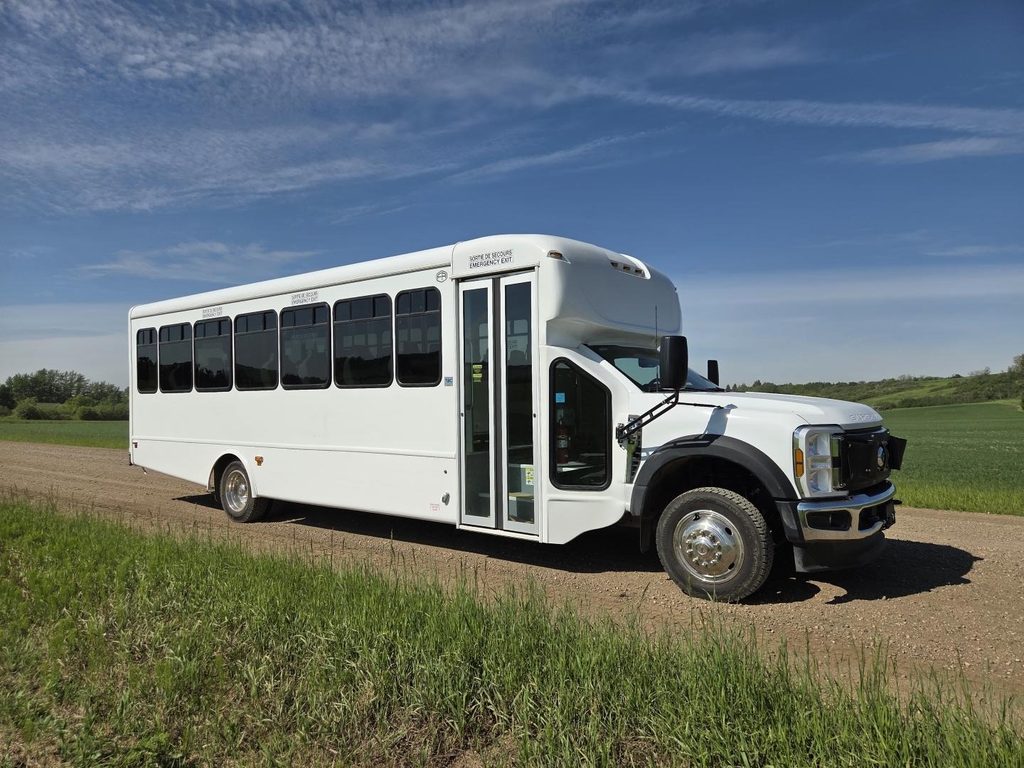
It’s not like buying a regular work truck or a passenger van when you are shopping for a people mover. These vehicles transport passengers and need to keep a schedule. They are also often idling or in-and-out of parking spaces loading and unloading passengers for hours on end. If you are a fleet manager or just someone who likes knowing their way around a bus, you want to start your search under the panels and follow it through to the paperwork.
It doesn’t matter if you want one for a hotel run, airport transfers – see https://www.lonelyplanet.com/articles/getting-around-canada for more details, a senior center, for employees, or just for your own private hire – you need to know what you will be putting it to before you make your choice.
Use Requirements
Before looking at ads, know how the vehicle will be used. You need to know how many passengers the bus will carry, how long the route is, the type of road, how much luggage or equipment will be brought aboard, if there is a need for accessibility features, and whether the bus will be used day or night. These details can help narrow down the right type of vehicle and make it easier to compare options from a shuttle bus dealer.
A smaller vehicle might be easier to handle and cheaper to maintain, while a larger vehicle can make fewer trips. Both scenarios will cost you money if they aren’t right. Having too many empty seats wastes gas and having too many passengers on board slows down every trip. Ask yourself:
- Do I need 20 seats or 40 seats for my daily trips?
- Are passengers likely to bring bags, wheelchairs, bikes, or tools?
- Will the route include mountain passes, backroads, or snow driving?
- Will I be able to get the bus under the awning of a restaurant or into my garage?
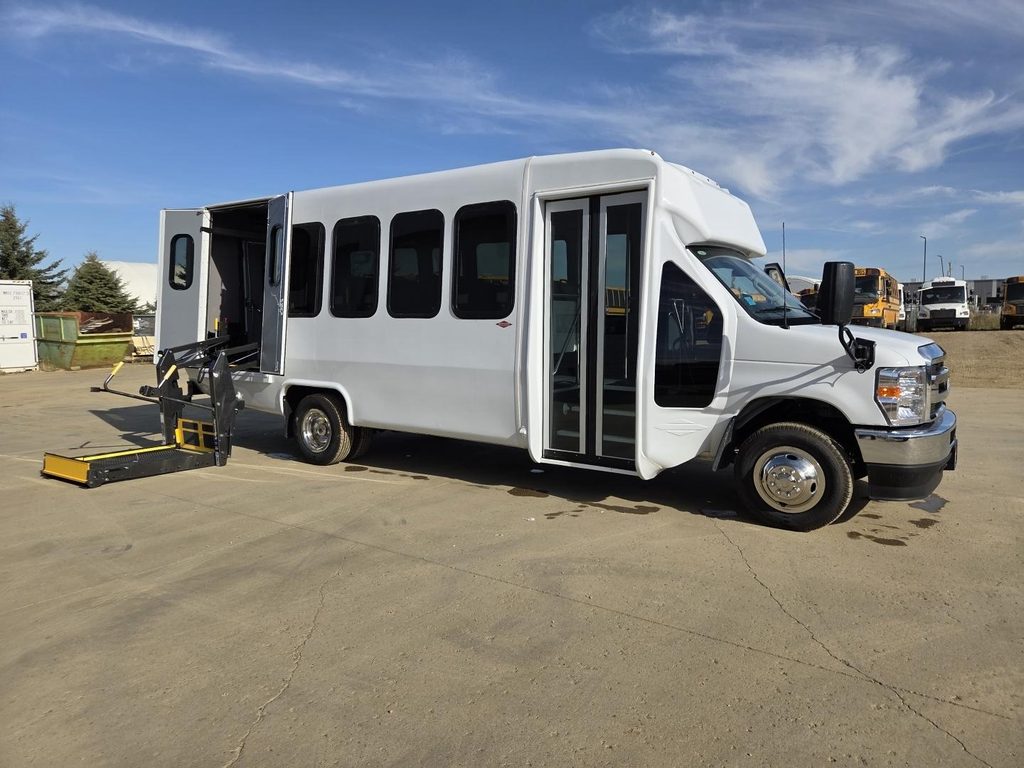
- Do I need a lift or ramp?
Don’t guess at clearances – measure them. A bus that looks like it is 10 feet tall might not fit under a nine-foot-six-inch awning after you account for roof-mounted units and rough ground.
Mechanical Condition
The body of a shuttle bus might look nice, but the parts that support it may not. These are hard-working machines, taking constant abuse from heavy braking, heavy loads, stop-and-go traffic, hard turns, and extreme temperatures.
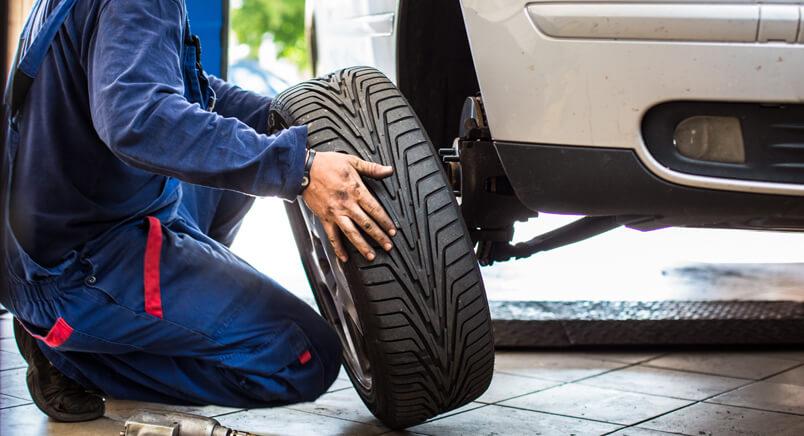
Rather than looking for individual defects, you want to find patterns. Bad tire wear could mean alignment or suspension problems, and even worse, steering issues. Don’t just look at brake pads and drums; you should also inspect calipers, lines, rotors, the parking brake, and warning lights. Look for rust on the frame and underbody, especially if the bus has lived through a few Canadian winters.
Other items to pay special attention to include:
- Suspension bushings, shocks, and springs, as well as air components if it has them
- Leaks from the engine, transmission, differential, and lift
- Cooling system condition, including fans, hoses, and evidence of overheating
- Battery and charging system, especially if the bus has a lift or lots of lights
- Doors, steps, handrails, and exits
Service History
Before you buy, you should start the bus cold and then take it for a drive. An engine that fires right up after sitting for a few minutes isn’t the same as one that sat overnight. A well-documented maintenance history isn’t glamorous, but it can be more valuable than a clean interior. Look for oil change intervals, transmission service, brake services, cooling-system repairs, inspections, and replacement of wear items.
An absence of documentation doesn’t mean you shouldn’t buy the bus. But the price should allow you to perform overdue maintenance.
For any given vehicle, establish what needs to be addressed immediately, over the next six months, and prior to the upcoming driving season. Tires may have legal tread depth but be unsuitable for consistent winter driving. The lift may be operational for a short test drive but exhibit late engagement or deterioration that requires additional assessment.
Passenger Cabin
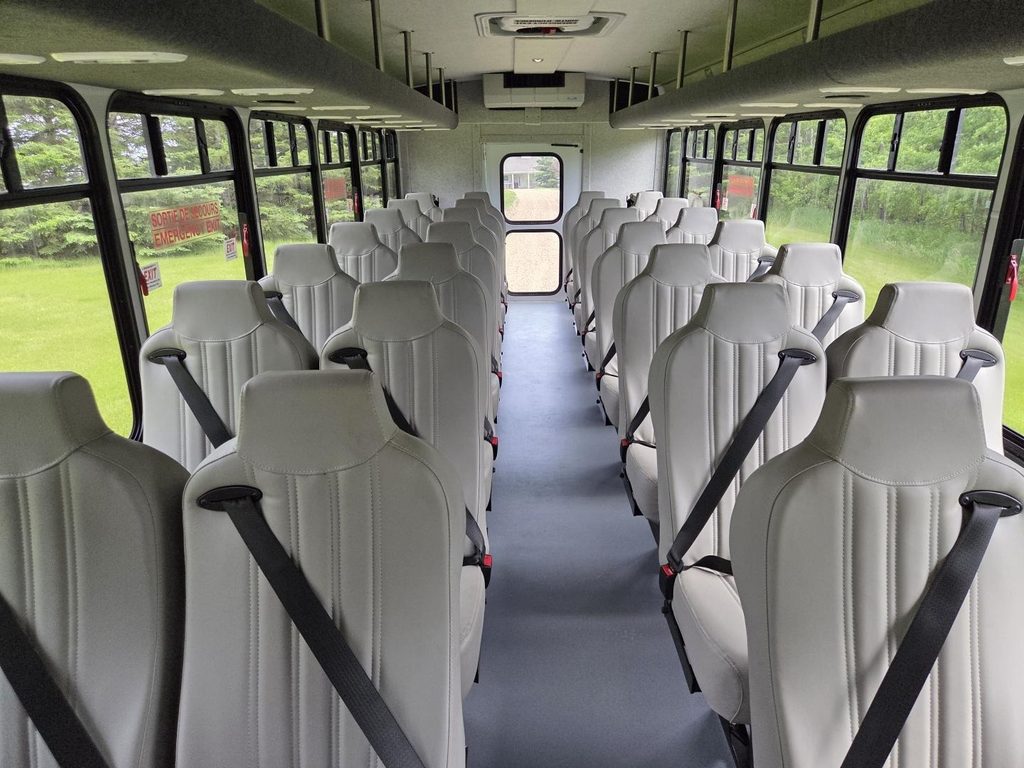
The passenger area is a functional component of the vehicle and should be tested accordingly. Every seat, seat belt, light, fan, heater, radio, window, door, and emergency latch should be checked. Check the floor edges and steps to ensure loose parts aren’t present.
Cabin heating (see here) is especially important in Edmonton and other northern cities. A bus might operate normally, yet leave the passengers freezing if rear heating is ineffective, fans are weak, or door seals are faulty.
The accessibility equipment demands scrutiny. Test the wheelchair lift throughout its travel range, check the switches, inspect the pivot areas and platform, and verify that the seating arrangement accommodates a wheelchair user. If the lift needs a pricey repair, where can it be serviced, and how much time would be needed to get it repaired?
Legal Requirements
The regulations governing passenger transport vehicles depend on your province, the type of service you intend to provide, the seating capacity, and whether you will transport passengers across provincial borders. Make sure to research the registration, inspection, driver licensing, insurance, and accessibility requirements before finalizing a purchase.
Don’t expect a bus that was previously used for a different purpose to meet the requirements for a new use. For instance, a privately owned bus could be subject to different standards than one being used commercially. And make sure any modifications will not affect the safety equipment, the exit access, the weight ratings, or the annual inspection.
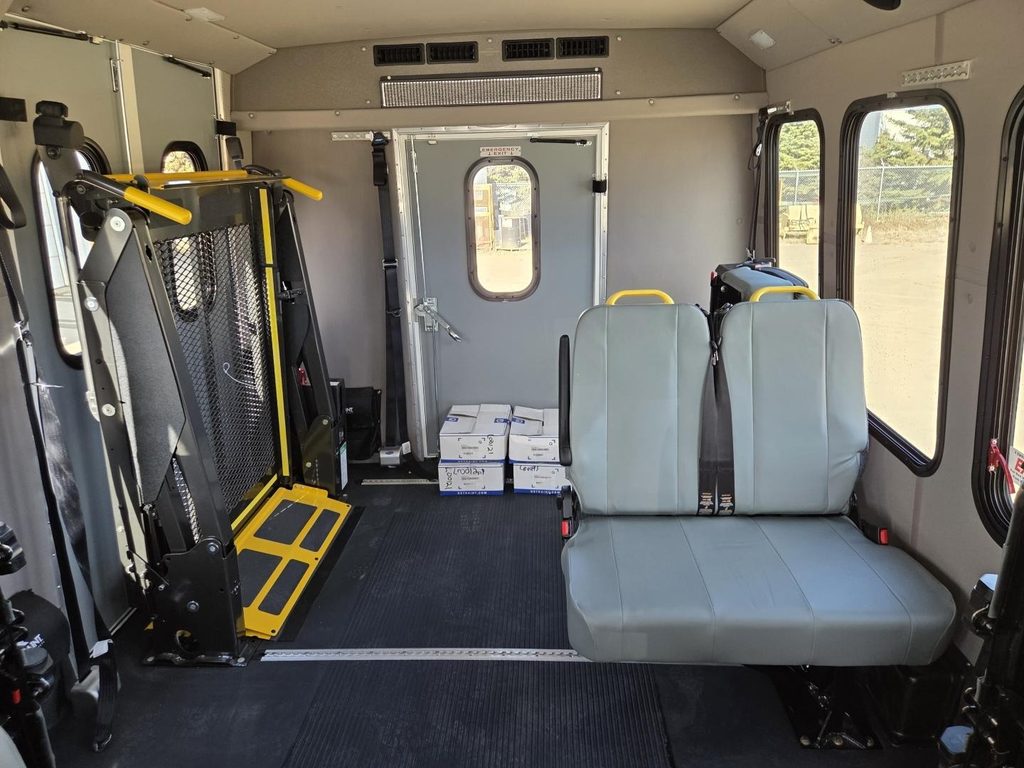
Pay attention to weight as well. Installing storage shelves, a wheelchair lift, toolboxes, and cargo could drastically affect your usable payload. Review the weight specifications of the bus and calculate the loaded weight instead of making assumptions based on the number of seats.
Total Cost
When buying a shuttle bus in Canada, the bottom line is availability. The lowest purchase price might cost you in terms of lost revenue once you discover that brakes, tires, heating, lift, and transmission repairs are due soon.
Get your mechanic or a commercial vehicle inspector to review the vehicle during your final visit, ask for the service history, and make a list of the required repairs before the vehicle goes into service.