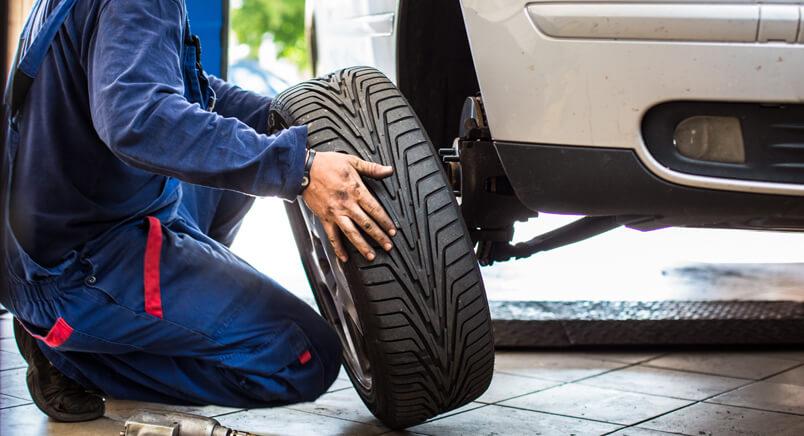
A tyre never fails without warning. Long before a casing lets go on the Eyre Highway or a trailer tyre starts throwing chunks of tread at seventy kilometres an hour, the rubber has usually been trying to say something for weeks. The trouble is that most of that message gets read in a five-second glance during a pre-start check, if it gets read at all. For fleet operators running heavy combinations across Western Australia's distances, learning to actually interpret a wear pattern is one of the cheapest maintenance skills available, and it starts with knowing what to look for on a set of wholesale truck and trailer tyres before the pattern becomes a problem on the road.
Tread wear is essentially a record of everything the tyre has been asked to do: how much air it was carrying, how straight it was pointed, how the suspension was behaving underneath it, and how the load above it was distributed. Read correctly, that record tells a technician what's wrong mechanically well before a roadworthy inspection or, worse, a roadside failure does.
Centre wear points to overinflation
When the middle third of the tread is wearing noticeably faster than the shoulders, the tyre has been running too much air for the load it's carrying. Overinflation causes the casing to bow outward in the centre, so that section of tread makes disproportionate contact with the road while the shoulders barely touch down. It's a common finding on tyres that get topped up to a round number rather than to the actual load being hauled that trip, and it's worth remembering that a bulk tanker running light on the return leg needs less pressure than the same tanker running loaded. Left unchecked, centre wear shortens tread life considerably and reduces the contact patch available for braking, which matters a great deal on a laden semi coming down a grade.
Edge wear points to underinflation
The opposite pattern, wear concentrated on both outer edges with the centre tread still deep, almost always means the tyre has been running under pressure. An underinflated tyre flexes more than it should with every rotation, and that extra flex builds heat inside the casing while forcing the shoulders to carry load they weren't designed to carry alone. Heat is the real danger here. A tyre that's been quietly running low for a few thousand kilometres has been cooking itself from the inside, and that's precisely the mechanism behind a highway blowout on a hot day. Edge wear also drags on fuel economy, since an underinflated tyre has more rolling resistance than most operators would guess.
One-sided wear points to alignment problems
When one shoulder of a tyre wears down while the rest of the tread looks reasonably even, the cause is rarely the tyre itself. It's the alignment. A trailer axle that has drifted out of true, or a steer axle with camber or toe out of specification, forces the tyre to scrub sideways slightly with every metre travelled instead of rolling cleanly. That scrubbing eats one edge of the tread and does it fast, sometimes within a single long haul if the misalignment is severe. It also tends to show up unevenly across an axle group, with one tyre wearing hard while its twin on the same axle looks fine, which is usually the giveaway that this isn't an inflation issue at all.
Cupping and scalloping point to suspension faults
Wear that comes in a series of dips or scoops around the circumference of the tyre, rather than as a smooth pattern across the tread, is telling a different story again. Cupping and scalloping happen when the tyre isn't maintaining constant contact with the road surface, usually because a shock absorber has weakened, a bushing has worn out, or a suspension component has developed enough play to let the wheel bounce or hop slightly rather than track smoothly. On heavy trailers running rough station country or unsealed access roads, worn suspension components can turn what should be gradual, even tread wear into a scalloped pattern within a surprisingly short time. It's also one of the noisier problems, often announcing itself with a drumming or thumping sound at highway speed before it's even visible on the tread.
Irregular wear points to load imbalance
Wear that doesn't fit any of the tidy patterns above, patches of heavy wear scattered unevenly across the tread or between tyres on the same axle, generally comes down to how the load itself has been distributed. A trailer loaded unevenly side to side, or a combination running with axle weights out of balance, puts more work on some tyres than others regardless of how well those tyres were inflated or aligned. This is where fleet maintenance and load planning start to overlap, and it's a reminder that tyre condition is often as much a loading discipline issue as a mechanical one.
Why catching it early actually matters
For a passenger car, uneven tread wear is mostly an inconvenience. For a prime mover or a loaded trailer, it's a compliance and safety issue with real financial weight behind it. Heavy vehicles carry more mass at higher speeds over longer distances, so a wear pattern that would take months to become dangerous on a car can compromise a truck tyre in a fraction of that time. Beyond the obvious blowout risk, poor tread condition drags directly on fuel efficiency across a fleet's annual figures, and it's exactly what heavy vehicle inspectors are trained to spot at weighbridges and roadside checks.
Bruce Rock Tyres exists largely because of that reality, fitting and maintaining wholesale tyres for trucks, trailers, agricultural and earthmoving equipment out of the same Bruce Rock yard where Bruce Rock Engineering has built trailers since 1980. A road-train drive-through bay and after-hours call-out service reflect an operation built around the fact that heavy vehicle problems rarely happen at a convenient hour or in a convenient location. Reading a wear pattern correctly, and acting on it before the next long haul rather than after a failure, remains one of the simplest ways an operator can keep a fleet compliant, efficient and off the side of the highway.