
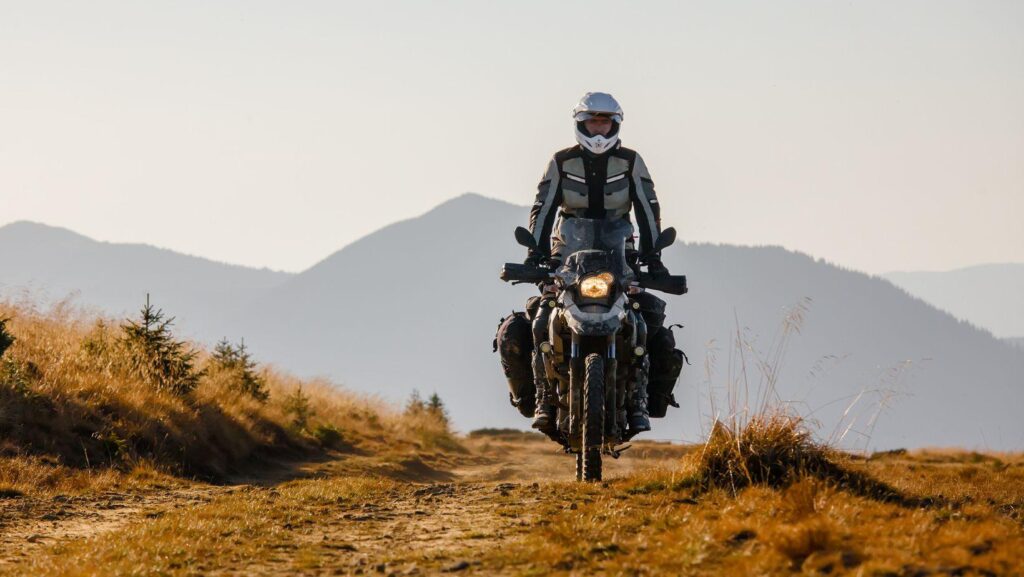
One wonderful safeguard for your motorcycle would be fitting paint protection film on high-impact areas. Besides, regularly waxing the bike to a brilliant shine or sealing it after thoroughly cleaning each time would go a long way to preserve the finish. It’s also a good habit to fixing chipped surfaces straight away to stop the damage from spreading. On a motorbike, the parts most at risk from stones are the front mudguard and fork lowers, a lower part of the fairing, and the leading edge of the tank. Because of this, focusing your attention there will bring the highest yield. You can easily protect your bike’s paint from stone chips with clear polyurethane film that acts as a barrier at those critical areas without sacrificing the aesthetics.
In fact, motorbikes present a particular challenge for paintwork compared to cars in one reference only: the lack of shield bodywork in front of you which absorbs debris means stones that are thrown up both by your own front wheel and by cars ahead strike painted surfaces directly. What is more, a bike is always exposed to weather as well as lack of garage panel gaps that would otherwise help protect from rain, dirt and other elements. So given all this, it’s no surprise that paint gets damaged way faster than owners usually realize until they first notice a chip showing through the primer’s orange color.
Where Gravel and Debris Hit a Motorbike Hardest
Almost all the impact comes from the front of the bike. Your front wheel is like a trampoline, scattering salt, small stones and grit right onto the fork lowers, the bottom of the front mudguard, the radiator area and the lower fairing. Sports bikes with full fairings usually get the belly pan and lower fairing edges most heavily marked, while naked bikes have their forks, headlight surround and front of the tank getting the brunt of the stone hits.
Besides, traffic in front is the one that makes it worse. If you keep following a car or a lorry on a gritted road in winter, you are going to get the tyres debris unceasingly coming at you, and a tiny one carried at 60 or 70 mph will have the power to break through the clearcoat layer and reveal the colour coat underneath. The exposed parts like the tank’s leading edge and the top of the front mudguard are right in the line of fire.
How the damage looks depends on the kind of bike and your riding style too. Adventure and dual-sport bikes, if used on gravel or unsealed roads, get a lot of their abrasion from low down, which is why they often have blasted fork lowers and engine cases. A touring bike that is mainly used on motorways gets small chipping here and there on the front fairing, and a track-focused bike will have the damage only on the nose and belly. Even riders who maintain custom graphics on a Suzuki RM 85 know that protective graphics can help reduce the appearance of minor scuffs and stone chips while keeping the bike looking fresh after regular use. Those who live in coastal or northern areas where the roads are heavily salted normally see their chips get worse quicker, because once salt comes into contact with the exposed metal under the chip, it causes it to corrode rapidly.
How Protection Film and Coatings Compare
Paint protection film is a transparent urethane layer that is usually only a few thousandths of an inch thick. This kind of protection film acts as a barrier that is most effective against stone strikes. If the film is applied to the tank, the front mudguard, the fork lowers, and the fairing leading edges, it will be able to absorb impacts that would have otherwise chipped the paint. Besides that, a good film is capable of self-healing small scratches when exposed to heat. A pre-cut set for a particular bike model usually costs between eighty and two hundred pounds for the high-impact panels, with a full professional coverage costing more once you add labour.
Ceramic coatings perform a different task and are frequently confused with each other. A ceramic layer makes the surface smoother and at the same time increases gloss and resistance to chemicals. Yet, it is only a few microns thick and does hardly anything in preventing stone chipping. One should think of ceramic as protection from dirt, bird droppings, and slight scratches rather than from gravel. Many riders use both, film on the impact zones and ceramic on top for easy cleaning.
Wax and synthetic sealants are at the low-cost and easy-to-use end of the spectrum. They will not prevent a chip either, but a wax layer that is applied regularly keeps the surface smooth, helps water and salt run off, and offers a little time before a new chip starts to corrode. For a rider who is on a budget or for an older bike a good carnauba or polymer sealant re-applied every few weeks throughout winter is a rational starting point.
How to Repair Stone Chips on Motorbike Paint
Catch chips early and the repair is quick. Start by washing the area and drying it fully, then wipe with isopropyl alcohol to strip any wax or polish, because paint will not bond to a greasy surface. Press a fingernail across the chip: if it catches and you see grey, silver, or bare metal at the bottom, it needs sealing soon before moisture gets in.
Matching the colour is where bike repairs get fiddly, because manufacturers run a huge range of colours and finishes, and the paint code is usually on a sticker under the seat, on the frame near the headstock, or in the owner’s handbook. Apply colour in thin coats rather than one thick blob, letting each layer flash off for ten to fifteen minutes, building up until the chip sits just below the surrounding surface. Rushing this is the main reason home repairs sink or crack later.
For the scattered small chips a bike collects across a tank or fairing, a kit built around colour matching and blending tends to beat a single bottle of touch-up paint. Products from suppliers such as visit site are designed to handle a spread of chips and blend each repair back into the surrounding paint, which suits the way bike damage tends to appear in clusters rather than one big mark. Seal the finished repair with clearcoat or wax once the paint has hardened, which can take a day or two to reach full strength.
Where a chip already shows orange, deal with the rust first by lightly abrading the spot and treating it before any colour goes on, otherwise you trap corrosion underneath. On a solid colour the repair can become nearly invisible at normal viewing distance, while metallics and the pearl and candy finishes common on bikes are harder to hide perfectly because of the flake and depth.
What Protection Realistically Costs and Saves
Money is usually the determining factor when it comes to what riders choose to do. So, it’s useful to make a comparison of the figures. For example, a front-end film kit installed by yourself may be priced at less than one hundred pounds, whereas a single damaged panel paint job at a motorcycle specialist can easily reach several hundred pounds once the colour matching and clear coat are taken into consideration. If the machine has a very intricate factory finish, then a comprehensive tank respray can even exceed the previous price in a way. That is why prevention virtually always turns out to be cheaper than repair for a bike that you want to keep.
Besides, there is also a resale factor. Having a pristine tank without any chips and the fairings kept clean is something that at the time of selling the vehicle you will definitely notice, as much as the buyers do not admit it, visible corrosion and the sandblasted front end actually bring the prices down quite a lot. Those who study the market for used motorcycles prices note time after time that the cosmetic condition, mainly that of the tank and the parts a buyer sees first, is the biggest factor in changing how one perceives that the value is much more than the same wear that is hidden underneath.