
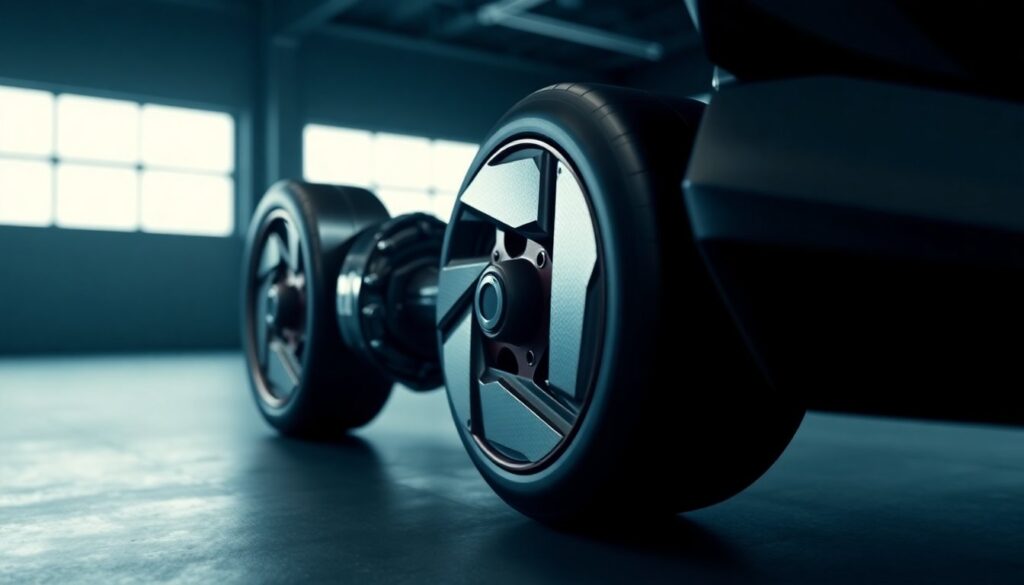
The BMW Vendetta axle origami ramecanicn concept changes how axles move and absorb force. Engineers test a folding tube that alters geometry under load. The design aims to reduce weight and improve stiffness while keeping safety. Early prototypes show promise in ride handling and packaging. Engineers measure performance in labs and on track to validate the approach.
Key Takeaways
- The BMW Vendetta axle origami ramecanicn concept uses folding geometry to dynamically alter axle stiffness and shape under load, improving ride handling and traction.
- Origami-inspired mechanics reduce axle weight and rotational inertia by strategically placing bending resistance, enhancing vehicle acceleration and packaging.
- High-strength steel combined with aluminum inserts and precision forming techniques ensure durable, repeatable fold behavior and extended fatigue life.
- Engineering challenges like stress concentration at hinge lines are addressed with progressive fold patterns to maintain alignment and NVH targets while minimizing weight.
- Manufacturing adapts stamping and robotic folding at scale, with prototype testing showing improved vehicle dynamics and a short stabilization break-in period.
- Maintenance involves inspecting fold lines and modular repair of collapsed sections, supported by aftermarket protective accessories and certified training resources.
What Is The BMW Vendetta Origami Axle? Concept And Key Features
The BMW Vendetta axle origami ramecanicn system uses folding patterns to change axle shape under load. The team designed hinge lines into thin-walled sections. The mechanism shifts moment of inertia where the vehicle needs it. The concept reduces rotational mass and allows compact packaging. The design keeps drive and suspension interfaces standard to ease fitment. The axle balances stiffness and controlled compliance for better traction and handling. The Vendetta axle origami ramecanicn name signals the use of folding geometry and the specific mechanical method the designers employed.
Why Origami-Inspired Mechanics Matter For Automotive Axles
Origami-inspired mechanics let engineers shape stiffness across the axle length. The approach places bending resistance where it improves control. The axle can absorb small impacts with elastic folding and still resist larger loads. The pattern reduces raw material needs and can cut mass. The method influences unsprung weight and rotational inertia, which affect ride and acceleration. BMW used the Vendetta axle origami ramecanicn tests to compare with traditional hollow axles. The results showed potential gains in packaging and a modest drop in part count.
Folding Geometry And Material Choices
Designers chose fold angles to tune stiffness and yield points. They matched fold geometry with high-strength steel and selective aluminium inserts. The material mix kept cost reasonable. The team validated folds with finite element analysis and physical bending tests. Surface treatments and local reinforcements extended fatigue life. The Vendetta axle origami ramecanicn prototypes used precision stamping and hydroforming to keep tolerances tight. The result produced repeatable fold behavior across test samples.
Design And Engineering Challenges For A Folding Axle
Folding geometry complicates stress flow and localizes peaks at hinge lines. Engineers had to manage stress concentrations and avoid sudden loss of stiffness. They developed progressive fold patterns to spread load. They also ensured the axle kept drive flange alignment under torque. The design required new jigs for assembly and new weld sequences to control distortion. BMW engineers iterated on the Vendetta axle origami ramecanicn layout to meet alignment and NVH targets while keeping weight low.
Manufacturing, Installation, And Real-World Testing
Manufacturers adapted stamping and robotic fold forming to build the axle at scale. The production line added inspection stations for fold geometry and weld quality. Installers used existing suspension mounts to lower retrofit cost. Field teams installed prototypes on test vehicles for durability and handling data. They gathered telematics on stress cycles, temperature, and vibration. Test drivers reported improved turn-in and stable rebound in some tune states. The Vendetta axle origami ramecanicn units required a short break-in period to stabilize fold behavior.
Maintenance, Repair, And Aftermarket Support For The Vendetta Axle
Service centers inspect fold lines and coatings during routine checks. Damage at fold zones requires section replacement rather than simple straightening. BMW planned repair modules to swap collapsed segments without full axle removal. Aftermarket firms developed protective sleeves and reinforcement clamps for heavy-use customers. Training materials and tooling kits rolled out to certified shops. The Vendetta axle origami ramecanicn approach increased parts complexity but kept long-term service practical through modular repair options and clear inspection criteria.
