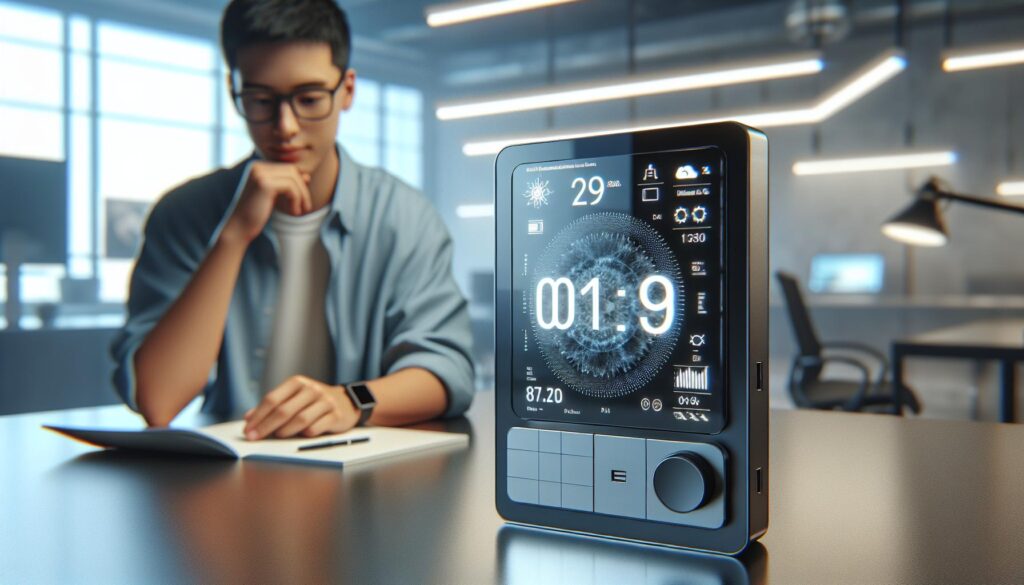
The experience of owning and driving a car has changed more in the past decade than in the previous three. What was once a largely mechanical relationship—defined by maintenance schedules, fuel stops, and the occasional road trip—has evolved into something far more connected, personalised, and data-driven. Today’s drivers don’t just operate vehicles; they interact with ecosystems of apps, software, and digital services that shape everything from how they park to how they present their identity on the road.
The Smartphone as the New Key
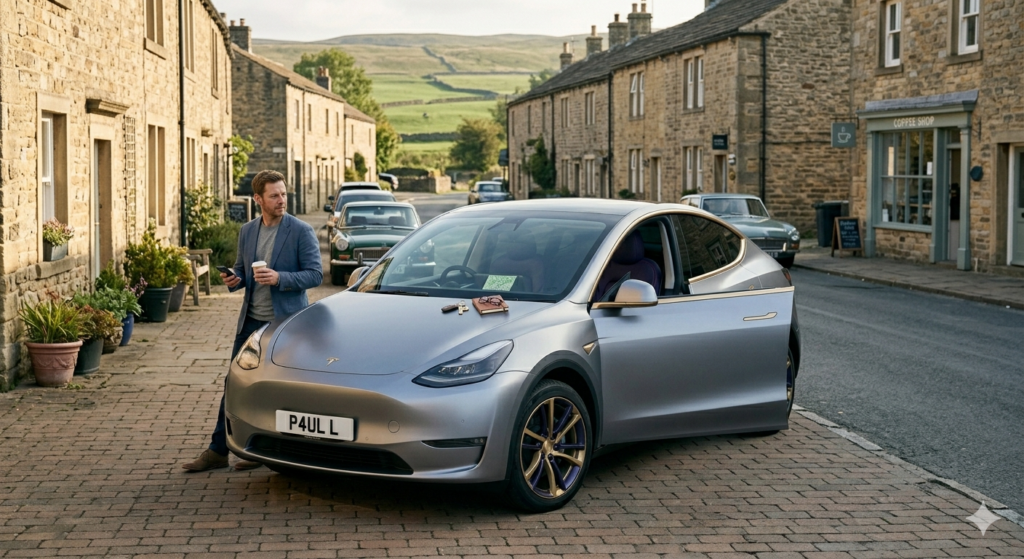
For many motorists, the traditional car key is becoming obsolete. Mobile apps now unlock doors, start engines, track vehicle location, and even monitor driving behaviour. Manufacturers such as Tesla, BMW, and Ford have integrated app-based control systems that position the vehicle firmly within the broader “smart device” landscape.
This shift has subtly altered driver expectations. Convenience is no longer a luxury—it is standard. Drivers expect real-time updates on traffic, remote diagnostics, and seamless integration with their digital lives. The car is no longer an isolated machine; it is another node in a connected lifestyle.
Automation Without Detachment
While full autonomy remains a work in progress, driver-assistance technologies are already redefining everyday journeys. Adaptive cruise control, lane-keeping assist, and automated parking systems are no longer confined to premium models. These features reduce cognitive load, particularly in urban environments where congestion and tight parking spaces are part of daily life.
Rather than distancing drivers from the experience, these technologies often enhance confidence. The modern driver is not disengaged but supported—able to focus more on decision-making and less on repetitive tasks. It is a subtle but important distinction that reflects how automation is being positioned: as augmentation, not replacement.
The Rise of Data-Driven Ownership
Every journey now generates data. From fuel efficiency metrics to driving style analysis, motorists are increasingly aware of how they use their vehicles. Insurance companies offer telematics policies that reward safer driving, while in-car systems provide feedback designed to improve efficiency and reduce wear.
This data-driven approach is also influencing resale value and maintenance. Digital service histories and predictive diagnostics mean fewer surprises and more transparency. Ownership has become less about reacting to problems and more about anticipating them.
Personalisation in a Connected Era
Despite the growing influence of software, personal identity remains central to car ownership. In fact, digital tools have amplified the ways in which drivers express themselves. Customisation no longer stops at paintwork or alloy wheels—it extends to ambient lighting, digital dashboards, and even sound profiles in electric vehicles.
Social media has played a significant role in this shift. Platforms like Instagram and TikTok have turned cars into visual statements, encouraging owners to curate and showcase their vehicles as extensions of their personality and lifestyle. The result is a culture where individuality is celebrated, even within increasingly standardised vehicle platforms.
This desire for personal expression also extends to more traditional elements of a car’s appearance. Subtle details, such as registration plates, continue to carry cultural and personal significance. Companies like Plates Express have observed sustained interest from drivers who view these finishing touches as part of a broader identity rather than a purely functional requirement.
Urban Driving, Reimagined
Cities are where the digital transformation of driving is most visible. Navigation apps dynamically reroute journeys in real time, parking apps eliminate the need for coins or meters, and congestion charging systems operate seamlessly in the background.
In the UK, initiatives such as Ultra Low Emission Zones (ULEZ) and smart traffic management systems are further integrating technology into the driving experience. These systems rely on a combination of sensors, cameras, and databases, creating an environment where compliance and efficiency are largely automated.
For drivers, this means fewer manual interactions and more passive participation in a digitally managed system. The challenge, however, lies in balancing convenience with privacy and ensuring that the benefits of connectivity do not come at the expense of control.
Electric Vehicles and the Software Shift
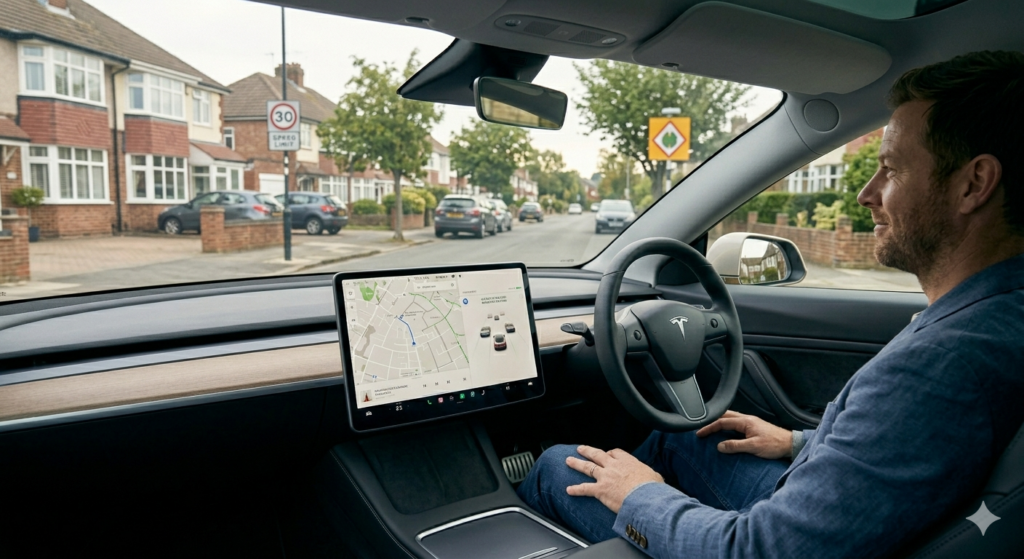
The rise of electric vehicles (EVs) has accelerated the transition towards software-defined cars. EVs are inherently more reliant on digital systems, from battery management to charging infrastructure integration. Over-the-air updates can improve performance, extend range, or introduce entirely new features long after the vehicle has left the showroom.
This has fundamentally changed the ownership timeline. Cars are no longer static products; they evolve over time. For drivers, this creates a sense of ongoing engagement, but it also raises questions about long-term reliability and digital dependency.
The Human Element Remains
Despite all these advancements, the emotional connection between driver and car endures. Whether it is the satisfaction of a smooth drive, the pride of ownership, or the simple pleasure of a well-designed interior, the human element remains at the heart of motoring.
Technology has not replaced this connection—it has reshaped it. Drivers now engage with their vehicles on multiple levels: physical, digital, and even social. The result is a richer, more layered experience that reflects broader changes in how we interact with technology in everyday life.
Conclusion
Car ownership in the digital age is no longer defined solely by the act of driving. It encompasses connectivity, personalisation, and an evolving relationship with technology that continues to redefine what it means to be a driver.
As apps become more sophisticated and automation more widespread, the future of motoring will likely be less about control in the traditional sense and more about collaboration between human and machine. Yet, amid all this change, one thing remains constant: the desire for cars to reflect who we are.