A camshaft’s role
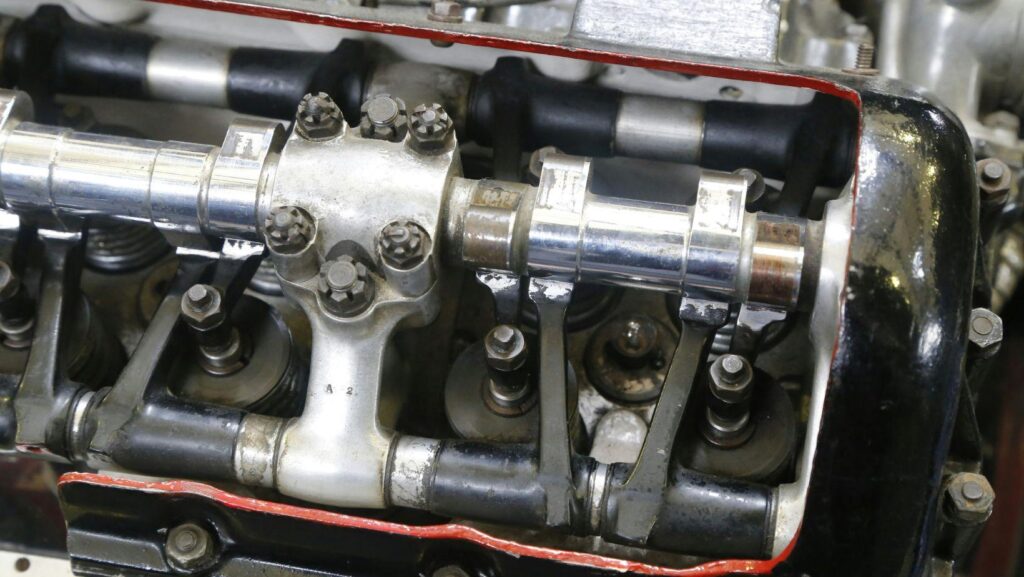
The camshaft is responsible for opening and closing the intake and exhaust valves on the engine, determining the timing of air and fuel entering the combustion chamber and the timing of exhaust gases exiting the engine. The degree of opening, the duration of the opening, and the timing of the opening of the valves is determined by their profile, and by the shape of the lobes. This means that the camshaft is one of the most important parts to consider when figuring out the character of an engine, whether it’s a smooth idle on a touring machine or a lumpy and aggressive sports engine.
Overhead cam versus pushrod
The majority of modern engines are overhead camshafts in the cylinder head, with a timing belt or chain meshed with the crankshaft. Single overhead cam (SHC) refers to a camshaft for each bank of valves, and double overhead cam (DOHC) refers to two camshafts, one for intake and one for exhaust. Pushrod-type engines are found on older and some American engines in which the camshaft is mounted in the engine block and the valves are actuated by pushrods and rocker arms. There are pros and cons to each design, but overhead cams are typically able to be revved up more and can be controlled with greater accuracy.
What causes camshaft problems
The single most deadly cause of death is oil starvation. The camshaft rotates on bearings which rely on a continuous stream of under pressure oil. When the oil level is low, the oil pump crushes or fails, or the oil passages become foully contaminated with oil sludge, the camshaft journals and bearing surfaces score and seize. Failure of the timing chain or belt can also wear out camshafts by allowing pistons to hit valves, bend or break valves and wear out cam lobes. For variable valve timing engines, failure of the actuator solenoids and phaser units can cause similar symptoms to camshaft failure. When it comes time to replace a camshaft, there are various websites out there such as PartHunt24 that will differentiate the various makes and models of camshafts and help you determine which ones to buy.
Signs of camshaft wear
If the ticking sound is louder as engine speed rises, it may be caused by a worn cam lobe or too much lash. If the camshaft no longer opens the valves to the proper lift, it can cause misfires, rough idle, loss of power, and decreased fuel economy. Codes for camshaft position sensor correlation or variable valve timing should indicate that the camshaft and related parts should be investigated when a check engine light is present.
Replacement process
The valve cover, timing belt/chain and camshaft bearing caps must be removed before replacing the camshaft. Install the new camshaft with the timing marks properly positioned and bearing caps (caps) torqued in the proper order. Hydraulic lifters or followers should be checked for wear, and replaced if they are worn, or install a new camshaft with worn followers will wear out early.
Preventing camshaft failure
Follow recommendations for changing oil as specified by the manufacturer; use the correct grade of oil. Never use longer recommended oil change intervals than recommended, even when the oil appears clean. Repair leaking oil as soon as possible. Always pay attention to your engine: If it is making a new noise, investigate it before it can get bigger.
Conclusion
A camshaft is a precision part that is long-lasting and trouble-free when maintained properly. Ignore it and the repair costs can be high. Refrain from using old oil, act quickly on warning signs, and purchase quality replacement parts as necessary.