
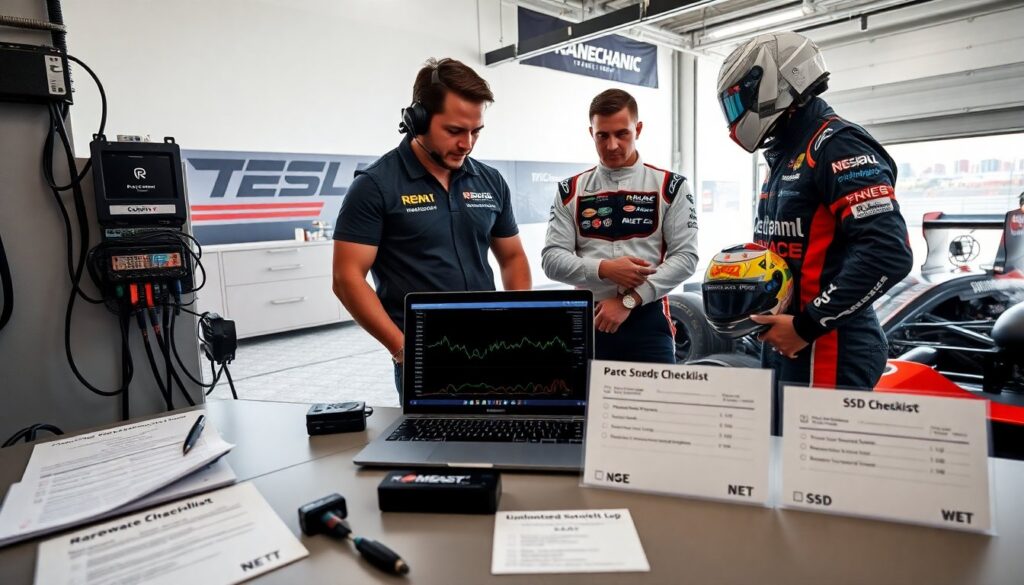
Ramechanic RaceBox tuning helps drivers and teams improve lap times and stability. It records inputs, applies maps, and adjusts live parameters. This guide explains what RaceBox does, how to run a hands‑on workflow, and how to validate changes. It uses clear steps and practical checks. Readers will learn when to use RaceBox, how to log useful data, and how to keep tunes safe on track.
Key Takeaways
- Ramechanic RaceBox tuning enables real-time map adjustments and data logging to improve lap times and vehicle stability during test days and race weekends.
- Use RaceBox on private tests first and avoid unvalidated maps in competitive sessions to ensure safety and reliable performance gains.
- A structured tuning workflow involves starting with a safe baseline, making one change per test cycle, and validating settings through consistent lap data and driver feedback.
- Backing up ECU and RaceBox profiles, validating sensor calibrations, and tagging tuned profiles with session conditions are essential for reproducible and safe tuning.
- Prioritize safety by regularly inspecting hardware connections, using kill switches, and preparing troubleshooting procedures to handle issues promptly during sessions.
- Maintain organized data management with clear naming conventions and detailed logs to reduce errors and accelerate testing decisions.
What Ramechanic RaceBox Does And When To Use It
Ramechanic RaceBox tuning collects sensor data, applies engine or chassis maps, and manages outputs in real time. The device reads inputs from the ECU, throttle position, brake pressure, steering angle, and lap triggers. It overlays alternate maps and logs the state for post‑run review. Teams use RaceBox when they need repeatable, low‑latency changes during a test day or race weekend. Engineers use it to test different ignition timing, fueling trims, or traction limits without reflashing the ECU. Drivers use it to test stability control settings and differential strategies. Use RaceBox on private tests first. Use it when track conditions or fuel loads change. Avoid using untested maps in qualifying or races unless you have validated data. RaceBox fits both street‑legal cars and racecars that accept CAN or analog inputs. It reduces the time to evaluate a setting. It also helps isolate driver inputs from chassis response by giving synchronized logs. Common use cases include heat management, anti‑lag tuning, brake bias adjustments, and traction control calibration. Teams that run frequent setup iterations find RaceBox most effective. Smaller teams use it to make structured changes without long pit stops. The device supports saving named profiles. Those profiles let crews switch quickly between baseline, aggressive, and wet maps. Ramechanic RaceBox tuning works best when an engineer defines clear test goals and collects consistent lap sets.
Hands‑On Tuning Workflow: From Baseline To On‑Track Adjustments
Start with a clear baseline. The team should install RaceBox, confirm sensor channels, and load a safe baseline map. The engineer should explain test goals to the driver. The driver should run three clean laps at a consistent pace. The crew should download logs and compare lap‑by‑lap traces. Look first at throttle, brake, and steering traces. Then check wheel speeds, yaw rate, and slip ratios. Make one change per test cycle. For example, alter boost target by a small, measured step. Reinstall the updated profile to RaceBox and repeat the three‑lap set. Track lap time, consistency, and a small sample of vehicle feel reported by the driver. Use lap overlays to see if the change altered corner exit speed or mid‑corner balance. If the change gives faster exits without instability, keep it. If the change increases tire slip or causes oscillation, revert. Keep notes and time stamps in the log for faster post‑session review. Cycle through tire pressures, brake bias, and diff settings in that order when testing balance. Change power delivery settings last, because they can amplify instability. Use RaceBox to simulate a power limit or launch control only after brake performance and balance tests pass. This order reduces risk and shortens testing time. Always return to the baseline map between major changes to verify repeatability. The team should schedule short cool‑down runs to check thermal behavior after aggressive map changes.
Backup, Data Logging, And Validation Steps
Before any track session, the engineer should back up the baseline ECU file and the RaceBox profile. Backups should go to at least two media: an external SSD and cloud storage. RaceBox logs should record at the highest useful sample rate supported by each sensor. Use consistent channel names to avoid confusion during review. Validate sensor calibration before the car leaves the pit lane. Confirm wheel speed sensors show plausible values at speed and that brake pressure traces respond when the driver presses the pedal. After each test, compare key channels across runs: lap time, peak lateral g, peak wheel slip, and maximum coolant and oil temperature. Use simple plots to detect trends. If a tune causes a temperature rise beyond safe limits, stop testing and revert to baseline. Use a conservative acceptance rule: a change must improve lap time by a measurable margin and not reduce safety margins. Tag validated profiles clearly and note the session conditions: track temperature, ambient temperature, and fuel load. Those tags help the team recall which profile worked under which conditions. Finally, archive session logs with the backed up baseline and the validated profile so the team can reproduce the result later.
Safety, Troubleshooting, And Best Practices For Reliable Tunes
Prioritize safety checks every session. The crew should inspect wiring harnesses, CAN connections, and mounting brackets for RaceBox. Secure the unit to avoid movement that can pull connectors. The team should install a hardware kill switch and verify it cuts ignition or fuel as required. If the driver reports odd behavior, stop and run a quiet lap for diagnostic logging. Check for ground loops, loose connectors, and sensor drift. When a channel reads implausible values, swap to a redundant sensor or use a sanity check channel such as RPM against wheel speed. If RaceBox loses connection mid‑session, revert to the last known good profile stored in the ECU. Keep a printed checklist with recovery steps in the pit box. For troubleshooting, use a stepwise isolation method: confirm power and ground, confirm CAN or analog signal presence, then confirm software mapping. Calibrate sensors after any hardware change. For longevity, avoid aggressive cable bending and route wires away from heat sources. Use heat‑sleeved wires near exhausts and handler clamps near suspension pick points. Limit the number of live map changes during a race stint to minimize risk. Train drivers to report precise symptoms: time, gear, throttle position, and steering input. That data helps engineers recreate issues quickly. Finally, maintain a simple naming convention for profiles and logs. That practice reduces human error and speeds up decision making during a test day.