Safety technology ramechanic appears at the start of modern robotics service work. Teams must protect technicians who service robots in factories and labs. This article explains why ramechanic racebox tuning matters. It lists core devices and how they work. It shows a step-by-step way to add safety technology ramechanic into workflows. It covers training, maintenance, and compliance for RAMechanic teams.
Key Takeaways
- Safety technology ramechanic is essential to protect robotics technicians from physical and electrical hazards in industrial and lab settings.
- Core safety devices like safety light curtains, safety-rated controllers, lockout-tagout, and emergency stop systems form the backbone of effective RAMechanic safety programs.
- Implementing safety technology ramechanic involves a step-by-step process including hazard assessment, control selection, system integration, testing, documentation, and periodic review.
- Proper training and maintenance ensure technicians understand safety devices and procedures, while regular inspections maintain system reliability and compliance.
- Adhering to standards such as ISO 12100 and IEC 62061 and keeping detailed records help RAMechanic teams meet regulatory requirements and reduce operational downtime.
Why Safety Technology Matters For RAMechanic Workflows
Robotics technicians face physical and electrical hazards daily. Safety technology ramechanic reduces risk from moving parts, high voltage, and software errors. Employers must lower injury rates to keep operations running. Technicians need predictable systems that stop machines when they approach danger. Safety technology ramechanic gives that predictable behavior. Managers track incidents and reduce downtime when they apply safety technology ramechanic. Regulators inspect workplaces and expect documented safeguards. Teams that adopt safety technology ramechanic speed repairs and avoid costly shutdowns.
Core Safety Technologies Used By RAMechanic
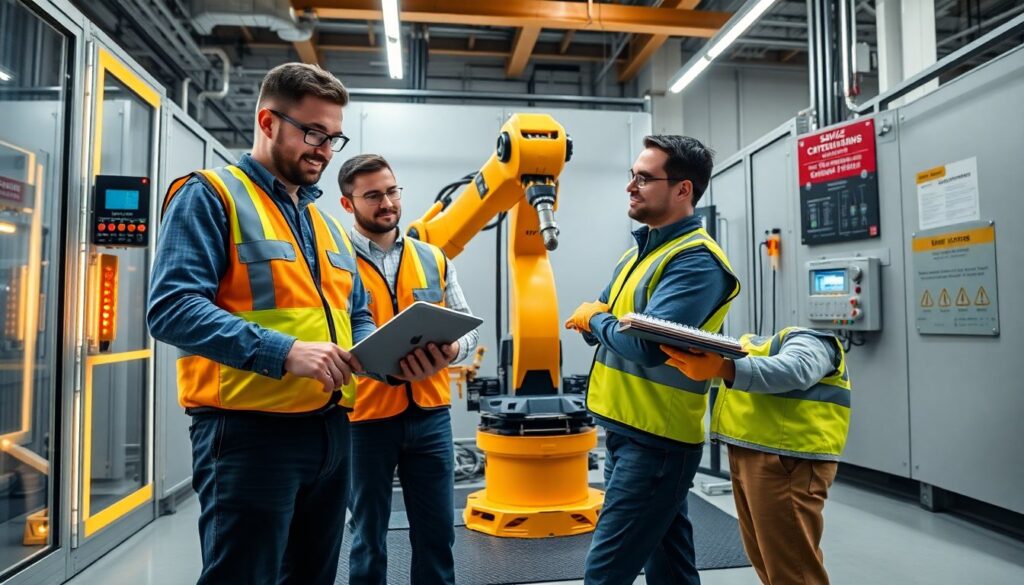
RAMechanic teams use several key devices to protect technicians. Safety light curtains stop robot motion when a person crosses a barrier. Safety-rated controllers manage stop signals and monitor sensors. Lockout-tagout devices isolate power during service. Collaborative robot limits slow force and speed during close work. Emergency stop systems provide immediate shutdown when someone trips a switch. Voltage detectors warn technicians before they touch panels. Fault logging systems record events for later review. Each of these elements forms part of a safety technology ramechanic program. The program must integrate physical devices with software checks and clear procedures.
Common Safety Components And How They Work
Light curtains emit infrared beams that form a protective plane. A broken beam sends a stop signal to the controller. Safety mats detect weight and halt machine motion when stepped on. Guard interlocks lock doors during operation and allow access only when the machine is safe. Emergency stops cut power or trigger controlled deceleration and a safe state. Safety-rated PLCs run certified logic that ignores spurious signals and returns to safe mode on fault. Torque and force sensors measure contact forces and stop motion when limits exceed safe thresholds. Each component sends binary signals that the safety controller evaluates. This binary approach keeps behavior clear and testable, which helps maintenance teams trust safety technology ramechanic.
Implementing Safety Technology In RAMechanic Environments: A Step‑By‑Step Approach
Step 1: Assess hazards. Inspect robot cells and list moving parts, pinch points, and energy sources. Step 2: Select controls. Choose light curtains, interlocks, and safety controllers that match the hazards. Step 3: Design layout. Place sensors to prevent access to dangerous zones and to allow safe service access. Step 4: Integrate systems. Wire devices to a safety-rated controller and test stop sequences under load. Step 5: Validate performance. Run tests that simulate technician tasks and confirm that safety technology ramechanic stops motion reliably. Step 6: Document settings. Record sensor ranges, controller logic, and test results in a maintenance log. Step 7: Review changes. Reassess when a robot or process changes to keep safety technology ramechanic effective. This step sequence keeps work clear and repeatable for teams.
Training, Maintenance, And Regulatory Compliance For RAMechanic Teams
Employers must train technicians on safety devices and procedures. Training should show how safety light curtains and interlocks work and how to test emergency stops. Supervisors must verify that technicians can perform lockout-tagout steps and voltage checks. Maintenance must follow a schedule. Teams should inspect sensors, clean lenses, and test controllers monthly or per manufacturer guidance. Records should show dates, findings, and corrective actions. Compliance requires following local and international standards such as ISO 12100 and IEC 62061 where applicable. Auditors will ask for documentation, training records, and test logs that prove safety technology ramechanic meets rules. Teams that keep clear records reduce inspection delays and limit liability.