Fighting wear ramechanic describes wear that appears from repeated friction on ramechanic components. This guide explains what fighting wear ramechanic is, how technicians find it, and how technicians fix it. The guide gives clear inspection steps, measurement tools, and repair choices. Readers will learn simple prevention methods they can apply in workshops and on-site.
Key Takeaways
- Fighting wear ramechanic refers to damage from repeated friction on ramechanic parts, reducing component life and increasing maintenance costs.
- Technicians must detect fighting wear ramechanic early through visual inspection, precise measurements, lubricant analysis, and operational reviews to prevent severe damage.
- Effective repair methods include polishing, welding, machining, and applying wear-resistant coatings based on wear severity.
- Prevention focuses on maintaining proper alignment, clean lubrication, and effective seals and filtration to minimize fighting wear ramechanic.
- Regular monitoring and documentation of wear patterns help engineers adjust materials, surface treatments, and maintenance schedules to extend part life and reduce downtime.
What Fighting Wear Ramechanic Is, Why It Matters, And Common Causes
Fighting wear ramechanic refers to material loss and surface damage on ramechanic parts caused by repeated contact and sliding. It matters because fighting wear ramechanic reduces component life, raises failure risk, and increases maintenance cost. Manufacturers will see reduced tolerances and machines will lose efficiency when fighting wear ramechanic appears.
Common causes include misalignment, insufficient lubrication, abrasive particles, and improper material pairing. Misalignment forces parts to bear load unevenly and causes local heating. Low or wrong lubricant allows metal-to-metal contact and speeds wear. Grit and dust create abrasive wear and remove protective films. Using soft materials against hard counterfaces causes rapid surface removal.
Technicians should treat fighting wear ramechanic as a symptom, not a single problem. They should trace the root cause to stop repeat damage. Early detection lowers repair cost and limits downtime. It also helps engineers choose better surface treatments, coatings, or materials to resist future fighting wear ramechanic.
Warning Signs, Inspection, And Diagnosis
Operators notice noise, vibration, and rising operating temperature when fighting wear ramechanic progresses. Visual cues include grooves, polishing, pitting, and edge rounding. Measurement changes include altered clearances and higher leakage in fluid systems.
Inspections must follow a pattern. First, inspect for visible damage. Next, measure wear-related dimensions. Then, sample lubricant and test for contamination. Finally, review recent operating records for overloads and stoppages. This sequence helps technicians confirm that fighting wear ramechanic caused the failure and not another issue.
Technicians should document every finding. Clear records let teams compare wear rates over time and evaluate repair choices. Records also let maintenance planners allocate parts and schedule downtime before fighting wear ramechanic reaches critical levels.
Tools And Measurement Techniques
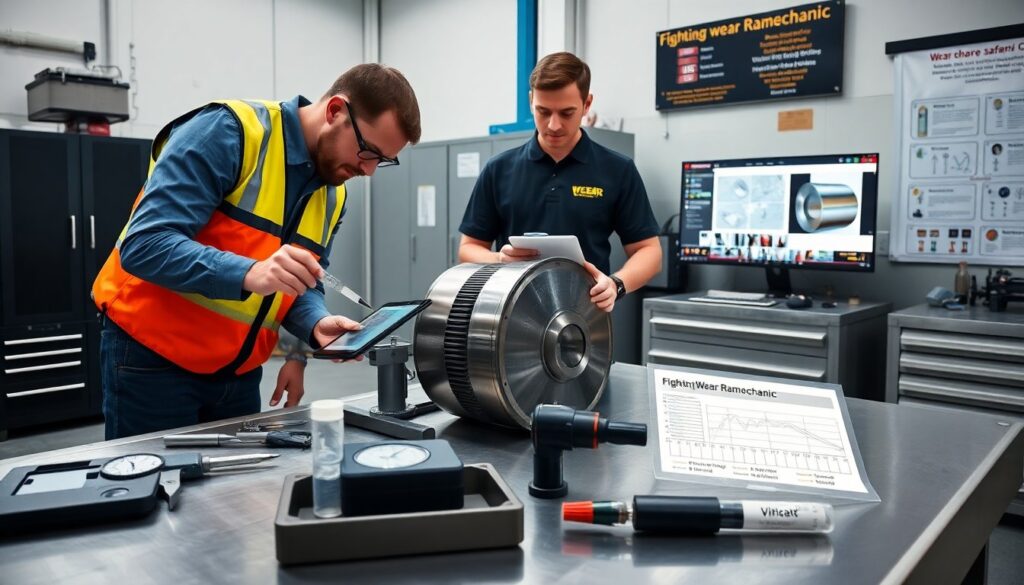
Technicians use calipers and micrometers to measure thickness and diameter changes from fighting wear ramechanic. They use dial indicators to measure runout and alignment. Surface profilometers quantify roughness and groove depth that result from fighting wear ramechanic.
Lubricant analysis requires a clean sample and a lab test for metals, particles, and viscosity changes. Particle counters show contamination level. Magnetic plugs and filters provide quick field checks for ferrous debris caused by fighting wear ramechanic.
For wear mapping, technicians trace wear patterns on parts and photograph them. They compare images to prior records to find wear trends. Technicians also use borescopes to inspect internal surfaces without disassembly when fighting wear ramechanic is suspected deep inside assemblies.
Step-By-Step Diagnostic Checklist
- Stop the machine and lock out power. This prevents further damage from fighting wear ramechanic.
- Clean the part and surrounding area. This reveals true wear patterns.
- Visually inspect for grooves, scoring, and deformation typical of fighting wear ramechanic.
- Measure critical dimensions with micrometers and calipers and compare to OEM limits.
- Check alignment with dial indicators and correct if deviation exceeds spec.
- Sample lubricant and send for particle and viscosity analysis to confirm contamination or breakdown linked to fighting wear ramechanic.
- Inspect seals and filters for wear that let contaminants accelerate fighting wear ramechanic.
- Photograph findings and record measurements for trend analysis.
- Decide whether to repair, recondition, or replace based on remaining life and safety margin given fighting wear ramechanic.
- Plan corrective actions and schedule repairs to prevent recurrence of fighting wear ramechanic.
Repair, Replacement, And Long‑Term Prevention
Repair options for fighting wear ramechanic include polishing, welding and machining, and applying wear-resistant coatings. Polishing removes light scoring and restores surface finish. Welding and machining restore geometry on heavily worn parts. Coatings such as hard chrome or thermal spray extend life when the base material cannot resist fighting wear ramechanic.
Replacement is necessary when wear exceeds safe limits or when repairs reduce material below design thickness. Technicians should choose replacement parts that match OEM tolerances and material properties to avoid repeat fighting wear ramechanic.
Prevention focuses on three simple actions. First, maintain correct alignment and clearances. Proper setup reduces uneven loading that causes fighting wear ramechanic. Second, maintain clean, correct lubrication and change lubricant based on condition, not only on hours. Clean lubricant reduces abrasive wear and lowers fighting wear ramechanic risk. Third, install and maintain effective seals and filtration to keep contaminants away from contact surfaces that suffer fighting wear ramechanic.
Engineers can also change material pairs or add surface treatments to reduce wear rate. Harder counterfaces, low-friction coatings, and surface hardening reduce the rate at which fighting wear ramechanic progresses. Regular monitoring of wear trends and early parts replacement schedules help teams limit unplanned downtime caused by fighting wear ramechanic.
Maintenance teams should set measurable targets for wear rate and inspect at fixed intervals. They should update work orders with the results of repairs and monitor the parts until they confirm that fighting wear ramechanic no longer recurs.