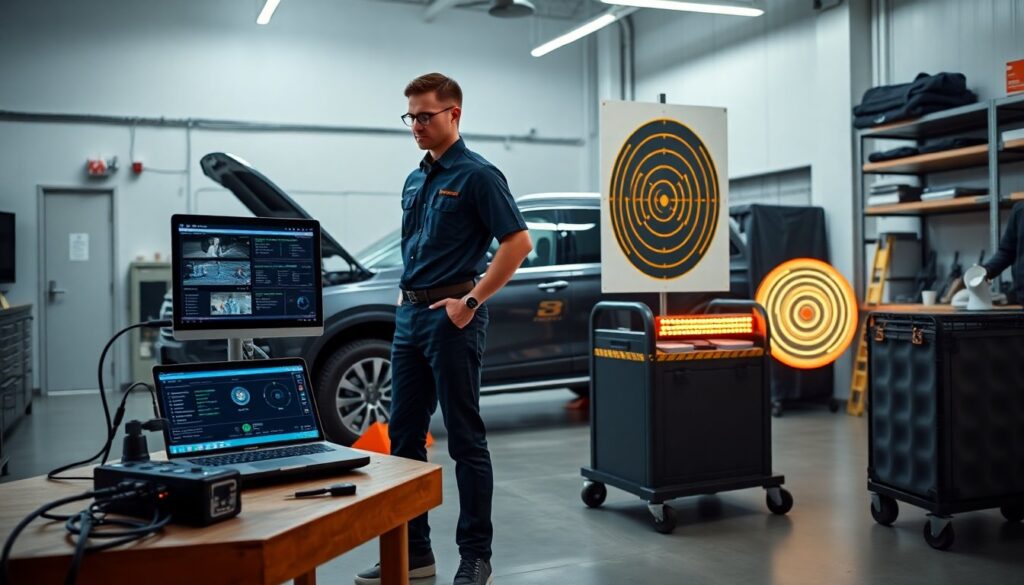
The ramechanik adas sensor yeti king calibrator sits on a shop bench and delivers fast, repeatable ADAS sensor alignment. Technicians use the ramechanik adas sensor yeti king calibrator when a vehicle shows calibration faults, after windshield replacement, or after suspension work. The tool connects to cameras, radar, and lidar. It shows live offsets and guides the technician with clear targets and step prompts.
Key Takeaways
- The Ramechanik ADAS Sensor Yeti King Calibrator provides fast, repeatable alignments for cameras, radar, and lidar sensors, essential after windshield replacements or suspension work.
- Technicians must prepare the vehicle on level ground, follow precise target placements, and connect the calibrator to a laptop and diagnostic tool to perform accurate calibrations.
- The device guides users step-by-step through calibrating cameras, radar, and lidar while displaying live offsets and accepting adjustments until within factory tolerances.
- Routine maintenance, including cleaning targets, updating firmware, and inspecting cables, is vital to ensure consistent and reliable ADAS calibrations with the Yeti King calibrator.
- Troubleshooting involves verifying vehicle positioning, checking diagnostic connections, and managing environmental factors like lighting to prevent calibration errors.
- The portable and user-friendly design supports most vehicle makes and models, making the Ramechanik ADAS sensor Yeti King calibrator ideal for small shops and mobile teams.
What Is The Ramechanik Yeti King ADAS Calibrator And When To Use It
The Ramechanik Yeti King ADAS Calibrator is a portable alignment device. It reads camera, radar, and lidar data and reports sensor offsets. The calibrator uses flat targets, LED boards, and software to show aim and height. The tool connects to a laptop or tablet and to vehicle diagnostic ports. A technician mounts the target and follows on-screen prompts.
A shop uses the ramechanik adas sensor yeti king calibrator after any event that can change sensor aim. A technician uses it after windshield replacement that moved a camera. A shop uses it after a front bumper or radar replacement. A team also uses it after frame repair or wheel alignment that changes bumper height. The device helps a shop return sensors to specified angles and heights.
The ramechanik adas sensor yeti king calibrator fits small shops and mobile teams. The unit folds for transport and stores in a case. A technician finds the setup quick. The company updates firmware and target profiles. The tool supports most common vehicle makes and sensor models. A technician confirms vehicle coverage before starting work.
Step-By-Step Calibration Workflow For Cameras, Radar, And Lidar
Prepare the vehicle. A technician parks the vehicle on level ground and sets the steering straight. The technician adjusts tire pressure to spec and removes loose cargo. The technician ensures the fuel tank sits at normal level.
Set reference points. The technician measures distance from the calibrator to the vehicle according to the vehicle sheet. The technician places wheel chocks and marks the floor if needed. The technician mounts the Ramechanik Yeti King ADAS Calibrator target at specified height and centerline.
Connect hardware and software. The technician connects the calibrator to power and to the laptop. The technician opens the calibration app and selects the vehicle make and model. The app loads the proper procedure. The technician connects a diagnostic tool to the vehicle and puts the vehicle into calibration mode.
Calibrate cameras. The technician aligns the target so the camera sees full target area. The app shows live camera view and offset numbers. The technician moves the target left-right and up-down until the app shows values within tolerance. The technician saves the camera calibration and records a pass.
Calibrate radar. The technician mounts the radar target at the correct distance and height. The app prompts the technician to confirm distance and yaw. The technician adjusts target position until the system reports acceptable error bands. The technician saves radar results to the diagnostic tool.
Calibrate lidar. The technician sets a lidar reflector or board at the required range. The app reads lidar returns and shows angular offsets. The technician shifts the board until the app shows minimal deviation. The technician records the lidar calibration in the vehicle memory.
Verify results. The technician runs a verification step in the app. The app rechecks camera frames, radar returns, and lidar points. The technician confirms that all values meet factory limits. The technician logs the work and prints or saves the calibration report.
The ramechanik adas sensor yeti king calibrator keeps the workflow simple. The tool reduces repeated measurements and cuts shop time. The unit stores job histories for audit and warranty needs.
Common Issues, Troubleshooting, And Routine Maintenance For Reliable Calibrations
A technician checks common issues before blaming the calibrator. The technician inspects targets for damage and cleans them. The technician checks that LED panels power on and that cables hold firm. The technician confirms that the laptop camera driver is current.
If the calibrator shows large offsets, the technician rechecks vehicle position. The technician ensures the vehicle sits on level ground and the steering lock is straight. The technician measures tape distances again. The technician resets the app and repeats the step. If the problem remains, the technician tries a second calibrator or a second vehicle to isolate the fault.
If the app shows no sensor feed, the technician checks the diagnostic connection. The technician verifies vehicle ignition state and ECU readiness. The technician swaps diagnostic cables if needed. The technician also inspects fuses that feed camera and radar modules.
If targets report noise or jitter, the technician checks lighting and reflections. The technician moves reflective tools away and adds shields. The technician ensures sunlight does not fall directly on the target. The technician stabilizes the target mount and tightens clamps.
Routine maintenance keeps the ramechanik adas sensor yeti king calibrator reliable. A technician cleans optical surfaces with lint-free cloths. A technician updates the device firmware monthly or as advised. A technician stores targets in padded cases to prevent warping. The technician checks battery health and replaces worn cells.
For persistent faults, a shop contacts Ramechanik support. The support team can run remote diagnostics and suggest replacement parts. The shop keeps a spare target set and a spare cable kit. The shop logs all calibration jobs and keeps records for warranty and safety audits. The practice reduces rework and helps keep ADAS systems safe on the road.