
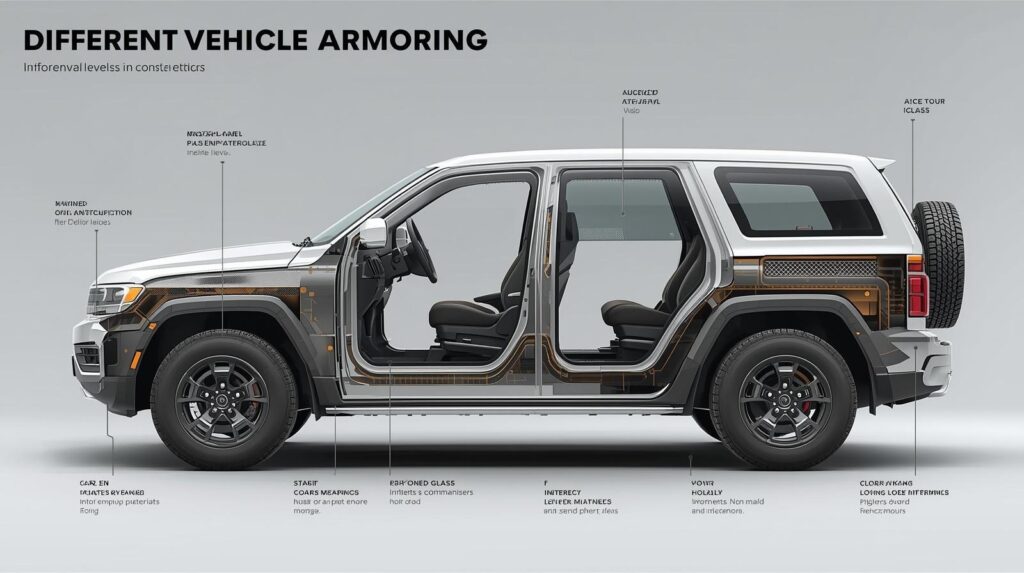
In a world where uncertainty seems to be the only constant, personal protection has shifted from being a luxury to a strategic necessity. Solutions like those offered by Blindajes 360 are redefining what it truly means to travel safely.
The Evolution of Ballistic Technology
The armoring industry has undergone a radical transformation over the last decade. Gone are the days when armoring a vehicle meant adding tons of heavy steel that compromised performance and maneuverability. Today, materials science allows us to use:
- Advanced polymers
- High-density ceramics
- Aramid fibers
These materials offer superior resistance at a fraction of the original weight. This evolution doesn’t just improve safety; it preserves the vehicle’s lifespan. Modern armor should be “invisible to the eye but impenetrable to the threat.” Achieving this requires precision engineering, where every panel is custom-designed to cover vulnerable points without altering the car’s aesthetics. The goal is simple: a security bubble that sacrifices neither comfort nor style.
360-Degree Armor: Total Coverage Without Blind Spots
The concept of comprehensive protection implies that there can be no weak links. An attack can come from any angle, and partial armoring is, in many ways, a false sense of security. True protection must cover:
- The roof and floor
- Glass and doors
- Structural pillars and the battery
- Run-flat systems (allowing for escape even with deliberate punctures)
Attention to detail is what separates artisanal craftsmanship from industrial work. In 360-degree protection, special care is given to overlap areas—the joints where materials meet. These are the spots attackers often target. A robust design ensures there are no “ballistic gaps,” keeping the cabin’s integrity intact under the most extreme conditions. Real security admits no shortcuts.
Intelligence and Prevention on the Road
Beyond physical barriers, modern vehicle security integrates cutting-edge electronics. Night vision cameras, proximity sensors, and encrypted communication systems are now essential complements to physical armor.
The ability to detect a threat before it materializes is just as vital as resisting an impact. Technology provides the driver with complete situational awareness. However, hardware is only half the battle; driver training plays a crucial role. An armored vehicle is a powerful tool, but it requires specific skills to be operated effectively in a crisis. The combination of high-quality armor and a trained driver creates an almost impenetrable defensive system.
Closing Thoughts
The future of vehicle security lies in the harmony between advanced materials, precision engineering, and intelligent technology. By choosing complete, professional protection, users aren’t just buying a product—they are purchasing peace of mind for themselves and their families. In a volatile environment, being prepared is the best investment one can make.