
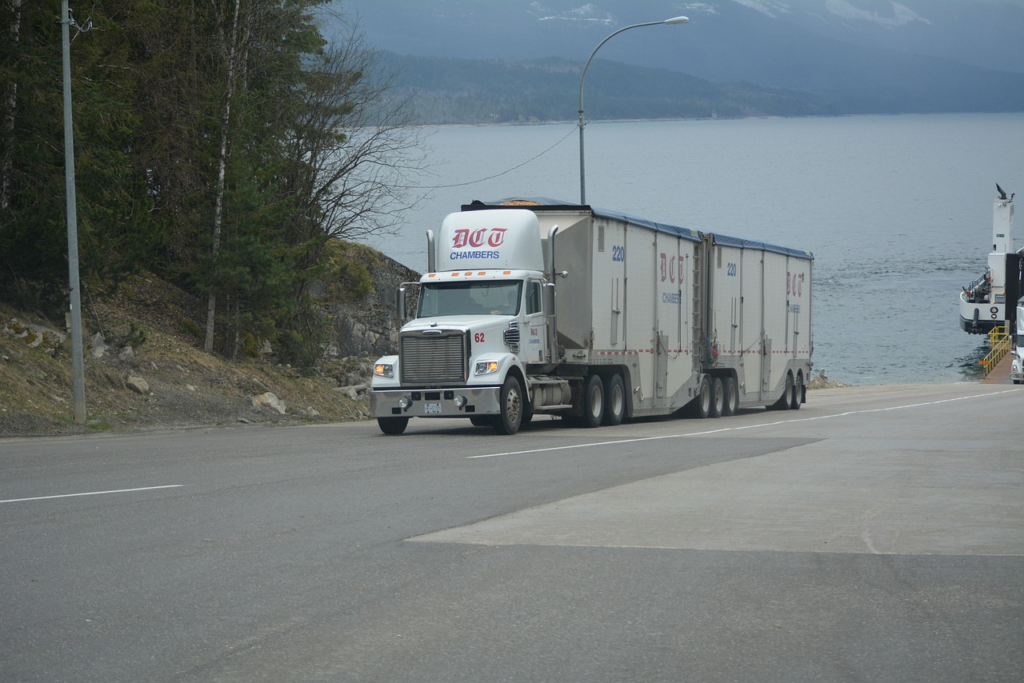
A traumatic injury truck crash is life altering…in both directions.
Life before the crash was normal. Sure, traffic sucks, but you’ve got it handled. Then boom, an 80,000 lb weapon shatters your car and changes everything.
If your life was flipped upside down by a traumatic injury truck crash, you need answers — and fast.
What are my rights after an accident?
Can I sue the truck driver?
Where can I turn for legal help?
Tragically, most people never ask these questions. They file whatever compensation paperwork their insurance offers and try to forget what happened.
Don’t make the same mistake. You deserve justice after a traumatic injury truck crash. Here’s what you should know:
Table of Contents
- Why Truck Accident Cases Are Different From Car Accident Cases
- Who Is Actually Liable After a Traumatic Injury Truck Crash?
- The Mistakes That Can Destroy a Claim
- What Compensation Can Victims Actually Claim?
- What Federal Regulations Apply — And Why They Matter
- How To Choose The Right Legal Help
- The Bottom Line
Why Truck Accident Cases Are Different From Car Accident Cases
The main difference between truck accident claims vs car accidents is scale.
When semi trucks collide with cars and smaller vehicles, entire organizations move to contain the liability. Emergency responders, multiple insurance teams, county attorneys. Large trucks cause large accidents.
More importantly, those large accidents are complex to process. Not everyone knows truck accident laws. That includes the person driving your family vehicle.
The smartest move is to find a Houston truck accident law firm before filing any claim paperwork or signing a settlement document. Don’t walk into a negotiation against teams who specialize in truck accident defenses.
5,078 people were killed in large truck crashes in 2023 alone, with 86,842 more injured. Need some proof large truck accidents are big business? The Federal Motor Carrier Safety Administration estimated property damage from large truck accidents cost taxpayers $146 billion in total.
Stop and let that sink in for a second.
Who Is Actually Liable After a Traumatic Injury Truck Crash?
Quick quiz.
Who do you think is on the hook after a traumatic injury truck crash?
The driver who lost control?
Bingo.
That’s too easy.
Anyone who violates federal trucking regulations. Anyone who caused the accident through negligence. And yes, the insurance company decides payouts. They’re considered negligent too.
Depending on the severity and cause of a crash, liability can extend to:
- the company which employed the driver
- any other driver who caused the crash
- the manufacturer of the large truck
- federal regulators who inspect large trucks
- pretty much anyone along the “chain of negligence”
While on the subject, let’s bust another myth.
Insurance companies don’t have your back.
Every call made to an insurance agent after a crash is recorded. If “hurting my back” gets mentioned during a claim call, expect lower back injury settlements to become more difficult down the road.
Insurers prioritize containment. Their job is to limit compensation payouts whenever possible.
Always consult an attorney prior to speaking with an insurance adjuster.
The Mistakes That Can Destroy a Claim
Did you know that people who file claims after a traumatic injury truck accident often sabotage their own case?
Every year, victims unknowingly compromise their right to compensation. Whether it’s because they assumed too much or hired the wrong attorney, thousands lose settlements — or leave money on the table.
Here are five of the most damaging mistakes claimants make:
- Missing deadlines.
- Speaking to insurance companies directly.
- Waiting too long to hire an attorney.
- Incorrectly estimating current and future damages.
- Settling early.
Curious to learn more? The next several sections will dive into these mistakes (and how to avoid them) in more detail.
Hint: There is a limited window to file a claim.
What Compensation Can Victims Actually Claim?
This one ties into a few of the mistakes above.
Many accident victims seriously underestimate their damages.
Imagine driving home from work when a distracted driver crashes into the passenger side door. You’re rushed to the hospital for minor whiplash complaints.
In the immediate moment, that’s the only injury. But here’s the problem: soft-tissue injuries can lead to lifelong issues.
Some insurers have even documented neck injury settlements costing upwards of $100k after the vehicle was totaled.
This pattern appears again and again with truck accident injuries:
- clients believe their injuries are “fine” after the initial evaluation
- insurance companies lowball settlement amounts
- victims sign off on settlements that don’t nearly cover accident-related expenses
A traumatic injury truck accident can hit you financially in several ways. The average traumatic injury claim costs $148,279 in damages. Typical compensation claims include:
- Emergency medical care
- Long-term health care
- Rehabilitative services
- Lost wages
- Pain and suffering
- Emotional trauma
Don’t gamble with your family’s future by taking the first settlement offer.
What Federal Regulations Apply — And Why They Matter
Thousands of federal regulations exist for large truck operators.
Regulations that ensure trucks are safely maintained, drivers are qualified for their routes, and overall safety is always the top priority.
That’s why it’s so important to hire a truck accident attorney with experience cutting through big business bureaucracy.
Two specific federal regulations that frequently benefit accident victims include:
- Electronic logging device mandates. Small trucks aren’t required to utilize ELD systems. Large trucks are. ELDs are virtually hack-proof timelines for where truckers promise to be and when they need to be there. Overworking drivers is a form of negligence. ELDs prove it.
- The Department of Transportation’s Hours of Service mandate. Every truck driver is given a daily driving limit by federal regulation. Truckers who violate these expectations are putting everyone on the road at risk. If an accident involves a large truck, the driver’s logs can be obtained to determine if Hours of Service regulations were violated.
While the list of regulations goes on, these two examples should give a clear idea of who these laws protect.
A single regulation violation is all it takes to prove negligence in a truck accident injury case.
How To Choose The Right Legal Help
If you’re like most accident victims, you probably don’t know the first thing about handling a traumatic injury truck accident.
Which regulations truckers should be abiding by. Who can be held liable. Heck, you might not even know what questions to ask your insurance company.
But here’s the thing. You should know these things. Not because anyone expects victims to prosecute the negligent party on their own, but because knowledge is power.
Take the time to vet any personal injury lawyer that walks through the door.
Ask them about truck accident laws in your state.
Ask what regulations they’ll be researching to build the case.
And most importantly:
Ask them how they plan on standing up to some of the largest insurance companies and commercial truck manufacturers in the country.
Browse attorney profiles to find someone who won’t back down.
The Bottom Line
Large trucks cause hundreds of thousands of injuries nationwide every year.
When those accidents are traumatic in nature, victims are left with life-altering injuries and bills they’ll never be able to pay.
The only way to recover maximum compensation is to know your rights ahead of time. Understand what can be claimed. Which federal regulations apply to the crash. And who can be held liable.